Orange County dining establishments reside in a demanding electrical world. Long hours, hot cooking areas, regular remodels, patio area expansions, and ever‑evolving health and energy codes all press on the same foundation: reputable power. When that backbone fails, tickets stack up, food waste climbs, servers apologize, and managers scramble. When it is developed and kept properly, the hood hums, refrigeration holds a steady temperature level, lighting flatters the food, and the entire operation simply works.
I have walked into cooking areas at 4:30 a.m. With a chef flicking on the lights by headlamp due to the fact that the panel failed over night. I have likewise stood in a pristine mechanical room where a well‑labeled panel and neat channel runs informed me exactly how service would go: quickly, safely, and without drama. The distinction is not luck. It is preparing, right setup, and genuine maintenance.
What makes restaurant electrical work different
A dining establishment loads circuits differently than an office and even a normal retail area. Start with the kitchen area. You will have heat‑intensive appliances that cycle, motors that begin under load, and manages that do not like voltage dips. Add dishwashers, booster heaters, undercounter refrigeration, make tables, combi ovens, induction burners, heat lamps, and a ventilation system that need to stay in sync with fire suppression. Then layer in front‑of‑house demands, consisting of lighting scenes, accent components, POS equipment, stereo, outside heating or string lights on patios, and now more than ever, pickup windows and kiosks with their own low voltage needs.
In Orange County, we likewise prepare for regional conditions. Coastal places handle salt air, so we specify corrosion‑resistant enclosures and check lugs for oxidation more frequently. Inland, summer season heat and complete patio area seating push load diversity in a different way than a quieter winter season week. Title 24 lighting controls, county health evaluations, and fire authority requirements converge with the National Electrical Code in ways that reward an experienced Orange County electrical contractor who understands the local AHJs.
How we evaluate an existing restaurant electrical system
When a dining establishment owner calls an electrician Orange County CA to speak about an upgrade, the first task is to measure where you are, not guess where you wish you were. A thorough evaluation consists of utility service sizing, primary distribution quality, branch circuits, grounding, and the web of low voltage systems that silently keep the doors open.
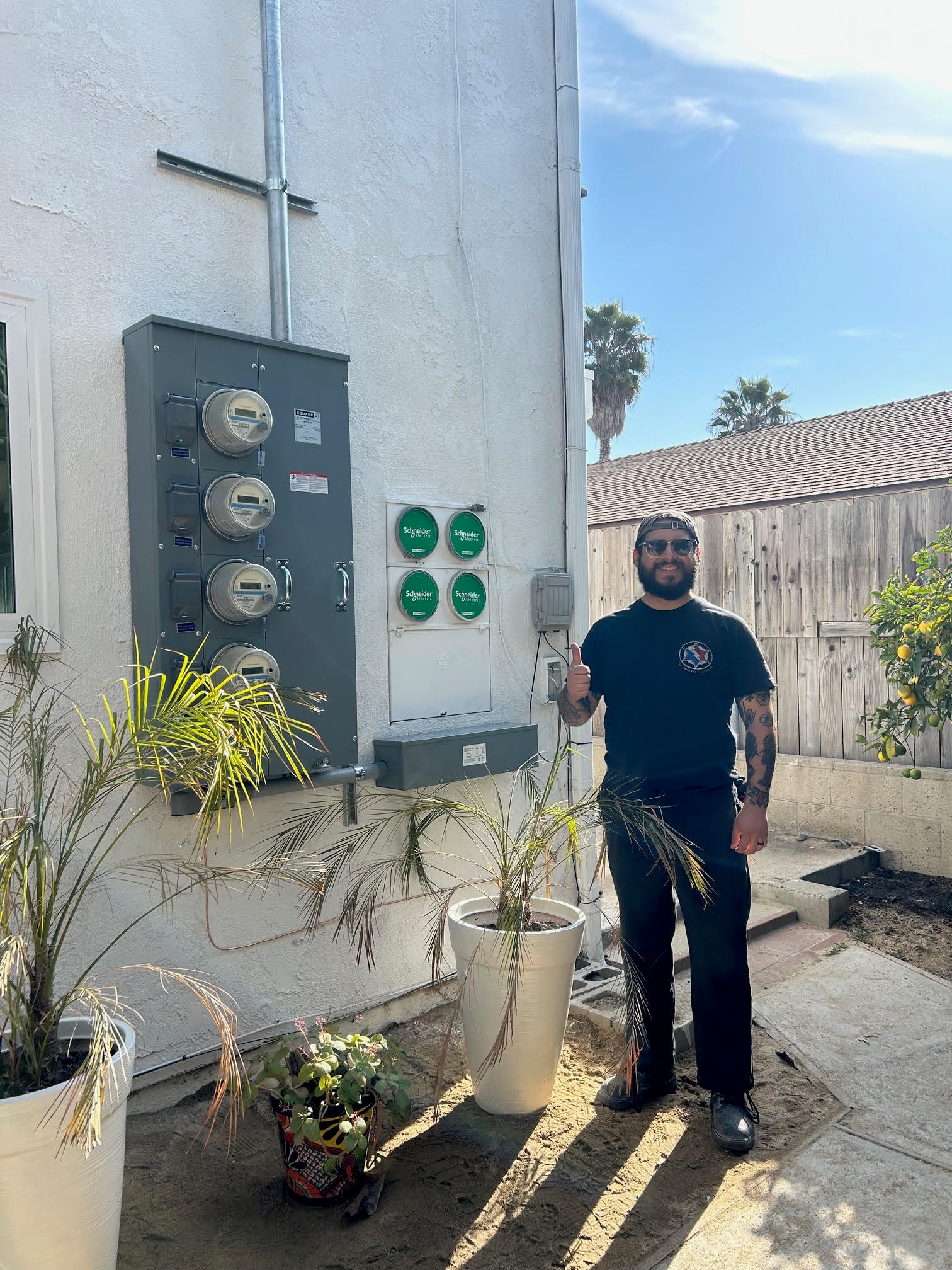
We start at the service. Lots of older spaces still have 100 or 200 amp services acquired from bygone occupants, in some cases with panels mounted in places that would not pass existing clearance rules. Modern kitchens that add electric combi ovens or induction cooktops routinely press those services to their limitations. An electrical panel upgrade Orange County dining establishments frequently require is a 400 amp service with tidy circulation, surge security at the service, and feeder runs that leave space for future circuits. Sometimes, panel replacement Orange County owners pursue has to do with security more than capability, such as eliminating outdated or remembered equipment and resolving double lugs, missing out on bonding, and used bus bars.
Load calculations matter. We do them the old‑fashioned way with connected loads and need factors, but we likewise stroll the line with a clamp meter during a rush to see what truth looks like. I have seen a row of reach‑ins that looked tame on paper however spiked on synchronised defrost in a manner that tripped a limited breaker every other Friday night. Patterns like that appear only if you observe operation, not simply drawings.
We relocation outward to branch circuits. Cooking areas should have more devoted circuits than most plans give them. That small microwave someone added at the expo station looks safe until it shares a 20 amp line with a heat light and printer. GFCI and in many cases GFCI plus AFCI security should match the environment, gadget listing, and code cycle implemented by the local jurisdiction. We inspect receptacle condition, cable cap fit, and faceplate integrity due to the fact that a used contact at a high‑draw device is a location waiting to become a service call.
Grounding and bonding win the quiet MVP award. Stainless tables, dish machines, hoods, and gas piping should be bonded properly. A weak or drifting ground can produce nuisance trips on GFCI circuits and inject noise that POS systems dislike. Mentioning POS, we map the network cabling, low voltage electrical wiring Orange County restaurants depend on for video cameras and audio, and every unlabeled power supply tucked under bars. Low voltage must be treated with the exact same discipline as line voltage if you want to avoid spaghetti that no one will ever untangle.
Lighting that flatters food and saves energy
Lighting changed more in the last decade than the previous 3 combined. Thoughtful lighting setup Orange County diners notice starts with color quality and control. I specify LEDs in the 2700 to 3000 Kelvin range for dining locations because warm tones make food appearance inviting. Kitchens benefit from a cooler 4000 to 5000 Kelvin temperature level to enhance contrast and minimize eye stress. High CRI chips make their keep the plate.
Controls are where Title 24 enters into play. You will require job sensing units or time‑based controls in non‑dining areas, daylighting zones near windows, and automatic shutoff methods after hours. Dimming should be peaceful, not flickery, so we combine chauffeurs and controls that are evaluated together. Recessed lighting Orange County dining establishments favor in dining rooms produces a tidy ceiling aircraft, but keep the trim types consistent, and provide the staff an easy scene controller. Intricacy belongs in the programs, not at the host stand.
Patio spaces become part of the Orange County dining rhythm. Outdoor lighting Orange County consumers enjoy often combines string lights, bollards, and wall sconces. We protect those circuits with in‑use covers, corrosion‑resistant hardware, and GFCI defense. If you install outside heating units, plan the devoted circuits early and collaborate with patio furniture layouts so cords and hot surface areas never ever mix.
Ceiling fan setup Orange County patios or dining rooms can assist with comfort and energy cost savings when properly put and balanced. Control them on different switches with labeled wall plates, so a server does not kill the fans while attempting to dim the lights.
The cooking area foundation: hoods, shunt trip, and interlocks
Nothing thwarts service much faster than a hood system that will not run. The fan, makeup air system, fire suppression, and electrical interlock form a safety chain. When the hood system discharges, power to specific circuits need to drop by means of a shunt trip breaker or noted device. On upgrades, I typically discover that old panels do not have area for shunt journey breakers, or the interlock is improvised. We correct that with a proper control circuit, clearly labeled, with a test treatment the manager can perform throughout weekly checks.
Motor starters for the hood and makeup air fan should have the exact same attention. Soft beginners or VFDs connected to demand ventilation can cut energy usage, but just when balanced with kitchen area needs and health code air flow requirements. Ventilation controls should fail safe and report alarms in plain language. If your staff must analyze strobe lights, you have a training problem developed into your electrical system.
Emergency and backup power
Not every restaurant requires a full generator, however plenty gain from selective backup. Generator setup Orange County clients request most often supports walk‑in refrigeration, POS, low voltage networking, emergency lighting, and a few crucial receptacles on the line. A portable generator with a legal transfer switch is a cost‑effective course for smaller operations. For high‑end or big locations, a gas standby unit with an automatic transfer switch spends for itself the very first time a Saturday night interruption develops into business as usual.
Battery backup has a place too. Exit signs and egress lights must satisfy code with essential batteries or main inverters. UPS systems protect POS, network switches, and security. I size UPS capability to provide a minimum of 20 to thirty minutes of runtime, enough to close tickets and securely power down equipment if required. Surge protection at the service and subpanels is cheap insurance coverage in a county where energy switching occasions and coastal storms can spike lines unexpectedly.
Service upgrades that keep development on the menu
Expanding menus typically push kitchen areas electrical due to the fact that of ventilation and indoor air quality goals. Induction lines, combi ovens, and electrical fryers are efficient, tidy, and quiet, but they need a thoughtful expansion course. When preparing an electrical panel upgrade Orange County dining establishments ought to think in stages. Construct conduit paths and leave area on the schedule and in the panel to include feeders later on. Coordinate with Southern California Edison or local energies like Anaheim Public Utilities for service size increases. Energy preparation can be eight to twelve weeks, longer during summer season, so early applications prevent schedule slips.
When we perform panel replacement Orange County kitchen areas likewise get better labeling, spare breakers, and space for interlocks and metering. We torque lugs to manufacturer specification and tape-record the values on a panel card. A year later, when we re‑torque and recheck, we know if a connection is relaxing and can address it before it heats up.
Smart controls are not just for homes. Smart home electrical wiring Orange County homeowners acknowledge has an industrial cousin in restaurants. Centralized control of lighting scenes, heating and cooling setbacks, and devices schedules decrease peak demand and squandered kWh. Tie them into a dashboard that a GM really uses, and you will conserve genuine cash without turning into a complete automation project.
Keeping cold rooms cold and tickets moving
Refrigeration is where dollars quietly vaporize when electrical systems misbehave. I choose each walk‑in condenser and evaporator set on dedicated circuits with lockable disconnects and clear labeling. Shared circuits for several cases welcome secret trips. Thaw controls and heating systems should not share with lighting or receptacles. During maintenance we examine voltage at the devices while under load, not simply at the panel. If we see voltage drop over 5 percent at the farthest case when compressors kick on, we plan a conductor upsizing or a dedicated run.
For dish areas, booster heating units are notorious for chewing through undersized circuits. If a dishwasher was swapped in years back, it may have a larger aspect than the initial, and somebody just doubled down on a weak circuit. We verify nameplate scores and right conductor size during regular service.
The value of an upkeep cadence
A restaurant electrical system that never stops working is a misconception. The objective is failure you select, throughout off hours, dealt with under a maintenance plan. We set up thermal scans, retorque, cleaning, and screening to catch problems early and keep cooking areas off the 24 hour electrician Orange County speed dial unless there is a true emergency.
Here is a straightforward upkeep cadence we deploy for lots of clients:
- Quarterly thermal imaging of panels and significant terminations, with a composed report and photos. Semiannual panel cleaning, retorque per manufacturer specifications, and breaker workout where allowed. Annual GFCI and emergency lighting test with replacements batched and identified, documented for health and fire inspections. Power quality look at POS and network racks, including UPS runtime test and battery replacement forecast. Visual assessment and confirmation of hood interlocks, shunt journey function, and generator or transfer change test under load.
This schedule is simple, cost effective, and proven. During a quarterly scan, we as soon as caught a feeder lug performing at 160 degrees Fahrenheit on a Saturday pre‑rush. 2 hours later that carry was cleaned, re‑landed, and torqued, and the night went on without anybody at the host stand knowing we were there.
Safety, code, and permitting in Orange County
Restaurants cross‑check versus a number of firms. The building department enforces NEC and California Electrical Code. The fire authority appreciates hood systems, egress lighting, and generators. The health department checks GFCIs in damp zones and makes sure equipment runs as intended. Cities throughout the county, from Irvine to Santa Ana to Huntington Beach, concern permits, and each has its own strategy review rhythm. A skilled licensed electrician Orange County operators trust will stage permits to keep tenant improvement schedules moving.
We also plan for earthquakes. Seismic bracing for panels, safe and secure devices anchorage, and flexible connections to home appliances are not simply code boxes to tick. I have actually seen rigidly piped fryers break fittings during small shakes. Stainless‑sheathed whips and listed connectors cost little and avert leakages and shorts.
If your structure sits near the coast, call out NEMA 4X enclosures where rain and salt can intrude. A rusty disconnect is not a sooner or later problem. As soon as contacts begin to pit, heat rises and failures follow. On older outdoor patios, we frequently replace all outside receptacles and covers with in‑use weather‑resistant types to align with existing code and endure the marine layer.
Wiring for the front of house
Bars and dining rooms frequently build up add‑ons, from neon indications to underbar refrigeration and glasswashers. Over time, power strips daisy chain under counters and the clean strategy devolves. During a remodel, we map where servers really need power and data, and we provide correct receptacle rely on different circuits, with tamper‑resistant and in some cases weather‑resistant gadgets even inside your home near sinks.
For brand-new builds or refreshes, we advise 2 circuits per POS station, one committed to the register and network gear, the other to peripherals like receipt printers and battery chargers. We land them on different phases to minimize cumulative loading, label them above the counter, and place them in metal raceway for security. Electrical repairing Orange County bar managers demand at 7 p.m. Usually traces back to untidy low voltage and unlabeled power. Tidy it up as soon as, and it stays clean.
Sound systems and TVs ride on low voltage, but they draw power someplace. We provide dedicated outlets in available but protected areas, prevent sharing with lighting dimmers to prevent hum, and use rise suppression on delicate lines. If your dining room counts on a specific lighting scene to set the vibe, think about a small UPS on the control processor. No one wants lights snapping to complete bright in the middle of Friday service since of a hiccup.
Outdoor dining, heating units, and code realities
Orange County accepted outside dining, and numerous short-term setups ended up being long-term. Hardwired, listed electrical heaters beat portable gas systems for safety and control, however they require appropriate circuiting. We compute the load for each heating unit, route emergency medical technician or liquidtight with attention to customer flow, and include disconnects within sight. Mounting height and clearance from combustible materials matter. Lighting and heating systems must survive on different controls so staff can adjust comfort without darkening the patio.
GFCI requirements for outside outlets encompass lots of patio area receptacles. In coastal zip codes, we choose devices rated for destructive environments and keep them backed by deep‑set, gasketed covers. If the patio area consists of a service window, we offer heat trace or solutions for condensation that might leak onto live parts.
EV charging, parking, and kitchens that go electric
EV battery charger setup Orange County organizations consider often begins as a guest feature or worker perk. When combined with an electric kitchen area retrofit, you need to prioritize loads. Smart load management can throttle EV charging throughout peak kitchen area demand and resume after close, all within the very same service size. An electrical vehicle battery charger Orange County code review will consist of ADA gain access to, line of sight to shutoffs, and signs. Coordinate striping and wheel stops early. For multi‑tenant centers, discuss shared EVSE infrastructure with the landlord to prevent cutting the parking lot twice.
When to require emergency situation help
Despite best shots, things break. An exact same day electrical expert Orange County restaurants can depend on must be required live arcing, repeated breaker journeys that you can not credit to one gadget, warm or buzzing panels, and any water invasion near devices. A true emergency electrician Orange County dispatch may be required if you lose power to walk‑ins, hood systems, or egress lighting throughout service. If you find yourself searching for an electrician near me Orange County at midnight, search for a local electrical contractor Orange County https://tradesmanelectric.com/ with commercial kitchen experience, not just property skills.
We keep a go bag with panel blanks, a series of breakers from common producers, GFCI devices, ferrules, wire nuts, noted whips, and a thermal video camera. That bag has actually gotten a bartender back online more times than I can count.
Costs, trade‑offs, and working within a budget
Restaurants run tight margins. A budget friendly electrical contractor Orange County owners employ still has to deliver work that passes assessment and holds up under heavy usage. The trick is sequencing. Focus on security and uptime first, then energy cost savings with great ROI, then nice‑to‑haves that improve ambiance.
Good prospects for stage one include panel removal, dedicated circuits for crucial kitchen gear, surge protection, and repairs to hood interlocks. Stage 2 frequently covers lighting control upgrades that meet Title 24 and conserve energy without dimming the guest experience. Stage three might consist of patio improvements, EV charging, or specialized accent lighting. A best electrical contractor Orange County track record is built on telling a customer what not to purchase as typically as what to buy.
Restaurants in older buildings
Many Orange County communities have charming structures with tired infrastructure. Whole home rewiring Orange County homeowners carry out has a commercial analog in dining establishments that acquire breakable cloth wiring, crowded junction boxes, or split bus panels. We thoroughly demo non-active runs, map the live ones, and replace with THHN in emergency medical technician or MC cable as appropriate. We label every crowning achievement in the panel and at the device end, and we pull a clean authorization path so future inspectors and contractors know what was done.

Historic facades can conceal modern conduit cleverly. Surface area raceway painted to match interior surfaces safeguards conductors while protecting plaster and lath. It is possible to appreciate the building and run a modern cooking area. It simply needs perseverance and a plan.
Inspections and documentation
Passing inspection is about clarity. A neat panel with legible directories, torque labels, and a one‑line diagram pinned neighboring tells an inspector you built with intent. An electrical examination Orange County authorities conduct on a dining establishment often includes spot checks behind equipment, so we prepare for access. Install disconnects where you can reach them without moving 700 pounds of fryer. Keep junction boxes above reach but not buried behind a soffit. If your remodel includes lighting zones, supply a basic control map and training for managers. When personnel usage systems correctly, they last.
A pre‑opening electrical preparedness checklist
Before a soft open, I walk the area with the GM and chef. We flip breakers, test scenes, and replicate a rush. Here is the list we use:
- Hood system test with suppression manual pull and automated trip verification, with power shunt shown and reset procedure demonstrated. Walk in and reach‑in equipment voltage and amp draw under load, with thermostat setpoints validated and door heaters checked. Lighting scenes set and labeled, front and back of home, with dimmers smooth across their variety and no flicker. GFCI and emergency lighting push‑to‑test throughout the structure, with spares on hand for failures. POS, printers, network, and audio on dedicated circuits and UPS systems, with a 20 minute loss‑of‑power test throughout non‑service hours.
That last practice run discovers gremlins before visitors do.
Choosing the right partner
Orange County has lots of electrical contractors. A leading rated electrical contractor Orange County restaurants return to combines fast reaction with a deep bench in business kitchen areas. Search for a business that can do both construction and service, so the team that installed your system can also maintain it. Request for references from locations like Irvine Spectrum eateries, Costa Mesa coffee shop, Newport Beach waterfront patio areas, and inland lunch areas in Orange and Tustin. A commercial electrician Orange County professional makes trust by showing up at 5 a.m. When the walk‑in warms up, not simply bidding occupant improvements at noon.
If you also operate a small inn upstairs or handle nearby condominiums, it assists if your professional has a residential electrician Orange County group too. Outlet setup Orange County, ceiling fan setup Orange County, and recessed lighting Orange County overlap when you develop out private dining, workplace locations, or back‑of‑house areas that feel more residential than industrial.
When you require Orange County electrical repair, choose a company that does electrical repairing Orange County cooking areas particularly. They will understand the distinction in between a bad breaker and a neutral shared behind a splash wall with a toaster on it. They will bring the best parts the very first time.
The quiet payoff of doing it right
Most guests will never see your panels, your labeling, your nicely dressed avenues, or the bonding strap under a stainless table. However they will taste the distinction when refrigeration holds best temperature level, hear the difference when dimmers stay quiet, and feel the difference when outdoor patios are warm without cables underfoot. Supervisors will feel the twin reliefs of fewer surprises and faster fixes when they do take place. Personnel will stop hunting for outlets that work. Owners will see utility bills taper down and five star evaluations go up.
That is the genuine goal of wise electrical upgrades and upkeep. It is not about gizmos or overbuilt gear. It is about developing for the actual rhythm of your dining establishment, setting up with craft, recording so the next tech can help you quickly, and keeping on a cadence that respects both your budget and your busiest nights.
Whether you are opening a brand-new concept in Anaheim, refreshing a legacy spot in Laguna, or building out a patio in Mission Viejo, a regional electrical contractor Orange County group with dining establishment experience can help you get more dependable power, much safer kitchen areas, and a better guest experience. And when the unusual surprise hits, having an exact same day electrical contractor Orange County trusts on your phone means service remain on track.